

Table of Contents
● Quick Facts: B2B SaaS at a Glance
● Why Knowing How to Identify a B2B SaaS Business Model Matters
● 1. It Runs on a Recurring Subscription, Not a One-Time Sale
● 2. It Sells to Businesses, Not Individual Consumers
● 3. The Software Is Hosted in the Cloud, Not Installed Locally
● 4. Growth Comes From Retention and Expansion, Not Just New Sales
● 5. The Sales Cycle Involves Multiple Decision-Makers
● 6. Pricing Scales With Seats, Usage, or Value Delivered
● 7. Customer Success Is a Core Department, Not an Afterthought
● B2B SaaS vs B2C SaaS vs Traditional Licensed Software
● How to Verify a B2B SaaS Business Model in 5 Minutes
● Frequently Asked Questions
● Final Thoughts
A software company can look like a SaaS business on the surface and still be something completely different underneath. That confusion is exactly why so many founders, marketers, and investors struggle with how to identify a B2B SaaS business model correctly. At Gulpoosh Digital Marketing, we have researched dozens of software companies while building their SEO and content strategies, and the pattern is always the same — the label “SaaS” gets used loosely, but the real business model hides in the numbers. In this guide, you will learn how to identify a B2B SaaS business model by looking past the interface and into the revenue engine, the customer relationship, and the delivery method through seven clear signs, a comparison table, and the questions people ask most about B2B SaaS.
Quick Facts: B2B SaaS at a Glance
● The global SaaS market was worth roughly 317 billion dollars in 2024 and is projected to reach close to 819 billion dollars by 2029.
● The average annual churn rate for B2B SaaS companies sits between 3.5% and 7%.
● A median Net Revenue Retention of 101% to 106% is considered healthy, while top performers reach 108% to 120%.
● The median CAC payback period for B2B SaaS companies in 2026 is around 15 months.
● More than 80% of companies are expected to run AI-enabled software by the end of 2026.These numbers matter because they are the fastest way to confirm how to identify a B2B SaaS business model without relying on marketing language alone.
Why Knowing How to Identify a B2B SaaS Business Model Matters
Founders need this distinction to position their company correctly to investors. Marketers need it to write accurate messaging instead of copying competitor buzzwords. Buyers and consultants need it to judge whether a vendor will still be supporting their product in three years. Learning how to identify a B2B SaaS business model saves everyone from expensive assumptions later on.
1. It Runs on a Recurring Subscription, not a One-Time Sale
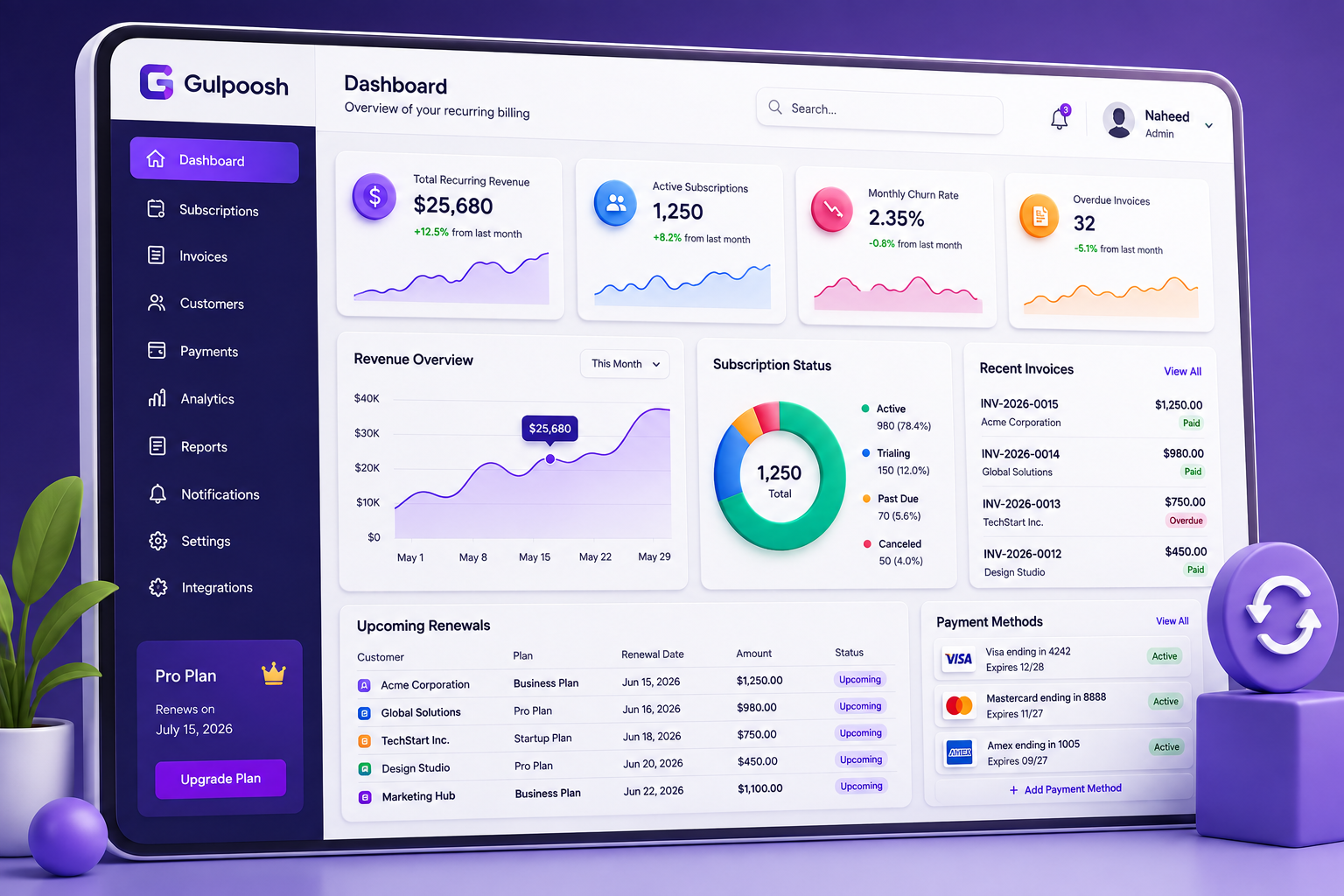
The single clearest way to identify a B2B SaaS business model is to look at how the company gets paid. A true B2B SaaS company charges a recurring fee, usually billed monthly or annually, in exchange for continuous access to the platform. There is no ownership transfer and no permanent license. The moment a customer stops paying, access stops too.This is different from traditional enterprise software, where a business paid once for a perpetual license and then a separate maintenance fee. Recurring billing changes the entire incentive structure. The company only keeps earning if the product keeps delivering value, which is why retention becomes the real scoreboard. If you want a fast way to identify a B2B SaaS business model, check the billing terms first. Everything else follows from there.
2. It Sells to Businesses, Not Individual Consumers
The “B2B” half of the equation is just as important as the “SaaS” half. A B2B SaaS company sells to other organizations, not to individual consumers acting on their own behalf. That single difference changes almost everything about how the business operates.Buyers in a B2B SaaS deal are usually evaluating the software on behalf of a team or department, which means procurement processes, security reviews, and budget approvals enter the picture. Marketing tools like HubSpot, workplace platforms like Slack, and CRM systems like Salesforce all fit this pattern because a company, not a single person, is the paying customer. When you are trying to identify a B2B SaaS business model, always ask who signs the contract. If it is a business entity rather than a private individual, you are looking at genuine B2B SaaS.
3. The Software Is Hosted in the Cloud, Not Installed Locally
Cloud hosting is the operational backbone that lets you identify a B2B SaaS business model with confidence. Instead of shipping a disc or an installer, the provider hosts the entire platform on infrastructure such as AWS, Azure, or Google Cloud, and customers access it through a browser or a lightweight app.
Why Cloud Hosting Matters for Identification
This detail matters because it removes the customer’s need to manage servers, apply security patches, or plan hardware upgrades. The provider handles updates centrally, which means every customer runs the same version at the same time. If a company still requires customers to download, install, and manually update software on local machines, it is not operating a genuine SaaS model, even if it charges a subscription fee. Cloud delivery is one of the fastest and most reliable ways to identify a B2B SaaS business model on a vendor’s website.

4. Growth Comes from Retention and Expansion, Not Just New Sales
Perhaps the most overlooked way to identify a B2B SaaS business model is to look at where the revenue growth actually comes from. In a healthy B2B SaaS company, existing customers contribute a significant share of new revenue through upgrades, added seats, or higher usage tiers, not only through brand-new logos.
Net Revenue Retention as a Diagnostic Tool
Net Revenue Retention, or NRR, measures how much revenue a company keeps and grows from its existing customer base over a year, accounting for upgrades, downgrades, and cancellations together. A median NRR of 101% to 106% is typical across the industry, while top-quartile companies reach 108% to 120%. Any B2B SaaS business model built for the long term treats this number as seriously as new customer acquisition, because roughly 40% of new annual recurring revenue now comes from existing accounts rather than fresh logos.
Churn Rate Benchmarks to Watch
Churn is the mirror image of retention, and it is another number worth checking before you decide how to identify a B2B SaaS business model as strong or weak. Annual churn in the 3.5% to 7% range is considered normal, with voluntary cancellations averaging around 2.6% and failed-payment churn adding roughly 0.9% more. A company with churn far above this range may still be technically a SaaS business, but it is not a stable one.
5. The Sales Cycle Involves Multiple Decision-Makers
Consumer software gets purchased on impulse. B2B SaaS almost never does. Learning how to identify a B2B SaaS business model also means understanding the buying committee behind every deal. A typical enterprise sale involves a champion who wants the tool, a finance stakeholder who approves the budget, an IT or security reviewer who checks compliance, and sometimes a procurement team that negotiates the final contract. This is why B2B SaaS companies build dedicated roles such as business development managers and account executives, whose job is to nurture relationships across an entire buying committee rather than convert a single click. Sales cycles routinely stretch from a few weeks for smaller tools to several months for enterprise platforms. If a company’s sales process shows a single decision-maker checking out with a credit card in under five minutes, you are probably looking at a B2C product, not a way to identify a B2B SaaS business model at all.
6. Pricing Scales with Seats, Usage, or Value Delivered
Pricing structure is one of the most visible clues when you want to identify a B2B SaaS business model quickly, because B2B SaaS companies rarely charge a flat fee for everyone. Instead, pricing scales with some measure of value: the number of seats, the volume of usage, the size of the customer’s data, or a specific feature tier.
Common B2B SaaS Pricing Structures
Per-seat pricing charges based on the number of team members using the platform, which works well for collaboration and productivity tools. Usage-based pricing charges according to consumption, such as API calls or data processed, and is increasingly common as vendors monetize AI features. Tiered pricing bundles features into Starter, Growth, and Enterprise packages, letting smaller businesses in at a lower price while capturing more value from larger accounts. Analysts expect that by 2027, roughly 70% of top SaaS vendors will offer consumption-based pricing for at least part of their portfolio, so this pattern is only going to become more common. Whichever structure a company uses, the presence of scalable, value-based pricing is a strong signal for anyone trying to identify a B2B SaaS business model correctly.
7. Customer Success Is a Core Department, Not an Afterthought
The final and possibly most telling way to identify a B2B SaaS business model is to look at the org chart. Genuine B2B SaaS companies invest heavily in customer success and onboarding teams, because renewals and expansion revenue depend entirely on customers actually adopting the product. A one-time software vendor has little financial incentive to help a customer succeed after the sale closes, since the money has already been collected. A B2B SaaS company earns nothing beyond the first month unless the customer keeps renewing, so proactive onboarding, training, and account management become core functions rather than optional extras. If a vendor treats support as a cost center to be minimized instead of a growth engine, that is often a sign the underlying model is not a true subscription business, even if the branding says otherwise.
B2B SaaS vs B2C SaaS vs Traditional Licensed Software
The table below makes it easier to identify a B2B SaaS business model by comparing it directly against its closest alternatives.
|
Feature |
B2B SaaS |
B2C SaaS |
Traditional Licensed Software |
|
Buyer |
A business or organization |
An individual consumer |
A business or individual |
|
Revenue Model |
Recurring subscription (ARR/MRR) |
Subscription, in-app purchases, or ads |
One-time license plus maintenance fee |
|
Sales Cycle |
Weeks to several months |
Minutes to days |
Weeks to months |
|
Hosting |
Cloud-based, vendor-managed |
Cloud-based, vendor-managed |
Installed on local servers |
|
Growth Driver |
Retention and expansion revenue |
New user acquisition and engagement |
New license sales |
|
Support Model |
Dedicated customer success team |
Self-serve help center |
Paid maintenance contracts |
How to Verify a B2B SaaS Business Model in 5 Minutes
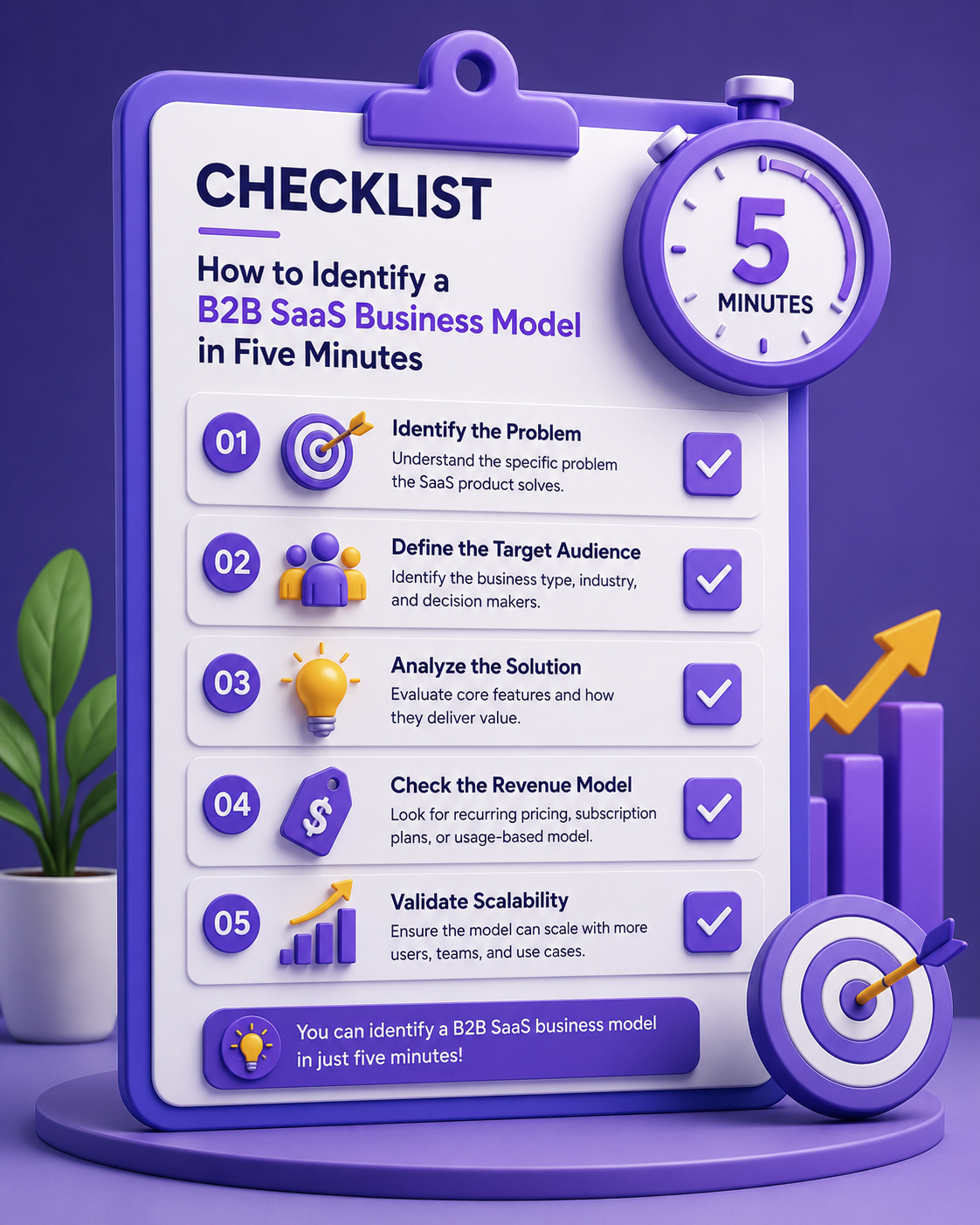
Once you understand the seven signs, you can confirm how to identify a B2B SaaS business model quickly using a simple checklist.
Check the Pricing Page
Look for recurring billing language such as “per month” or “per user, per year.” A pricing page built around seats, tiers, or usage almost always points to a genuine B2B SaaS business model.
Look at the Login Flow
If the product requires a browser-based login with no local installation, and offers team or workspace-level accounts rather than single-user accounts, that is a strong operational signal.
Read the Case Studies
Case studies that highlight retention, ROI, or long-term partnership rather than a single transaction are another reliable way to identify a B2B SaaS business model in a company’s own marketing.
Frequently Asked Questions
What is the easiest way to identify a B2B SaaS business model?
The fastest way to identify a B2B SaaS business model is to check how the company bills its customers. If the business pays a recurring fee for continuous cloud access rather than a one-time license, and the buyer is another organization rather than an individual consumer, it almost certainly qualifies as B2B SaaS.
Is every subscription software company a B2B SaaS business?
Not necessarily. Subscription billing alone is not enough. The buyer also has to be a business, the software has to be cloud-hosted, and growth has to depend on retention rather than one-off purchases.
What metrics prove a company runs a real B2B SaaS business model?
Net Revenue Retention above 100%, annual churn under roughly 7%, and a healthy share of expansion revenue from existing accounts are the clearest financial signals, far more reliable than marketing copy alone.
How is B2B SaaS different from B2C SaaS?
B2B SaaS sells to organizations through longer sales cycles involving multiple decision-makers, while B2C SaaS sells directly to individual consumers through shorter, often self-serve purchase paths. Pricing, support structure, and growth strategy all differ as a result.
Can a company be both B2B and B2C SaaS at the same time?
Yes. Some platforms serve individual users on a free or low-cost plan while also selling team and enterprise tiers to businesses. To identify a B2B SaaS business model inside a hybrid company, look specifically at where the majority of revenue and account management effort is concentrated.
Final Thoughts
Learning how to identify a B2B SaaS business model comes down to seven consistent signals: recurring billing, a business buyer, cloud hosting, retention-driven growth, a multi-stakeholder sales process, scalable pricing, and a dedicated customer success function. None of these signs works alone, but together they separate genuine B2B SaaS companies from software that only borrows the label.Whether you are a founder positioning your company, a marketer writing accurate messaging, or a buyer evaluating a vendor, this framework gives you a reliable way to identify a B2B SaaS business model without guessing. The businesses that get this right pair a strong product with consistent visibility, and that visibility is where marketing strategy earns its keep.That is exactly where Gulpoosh Digital Marketing comes in. Our team helps SaaS and technology companies turn their business model into a growth story through SEO, content marketing, and guest posting that reaches real decision-makers. Start growing your business today with Gulpoosh Digital Marketing — get more leads with SEO and guest posting, and take the first step toward higher rankings now.

